Surviving Mega Concerts in Seoul: Late-Night Transport Guide
Attending a K-pop or mega concert in Seoul — from sold-out Jamsil shows to historic outdoor events at Gwanghwamun Square — is an experience unlike any other. But once the final song ends, the real challenge begins: getting home safely after midnight. With venues holding up to 100,000 fans and Seoul's subway shutting down around midnight, knowing Seoul's late-night transport options in advance is essential. This guide covers every option — last subway times near Gwanghwamun and all major venues, night bus routes, and taxi strategies — so international visitors can plan a smooth exit in 2026.
What This Guide Covers
- A real survival story from Gwanghwamun — what happens when 100,000 fans and Kakao T collide at midnight
- Last subway times near every major venue including Gwanghwamun Square (2026 updated)
- Night Owl Bus (N-Bus) routes — stop locations, frequency, and which routes pass Gwanghwamun
- Taxi and ride-app strategies — Kakao T, Uber, and smart alternatives when demand surges
Why Mega Concert Nights in Seoul Are Different
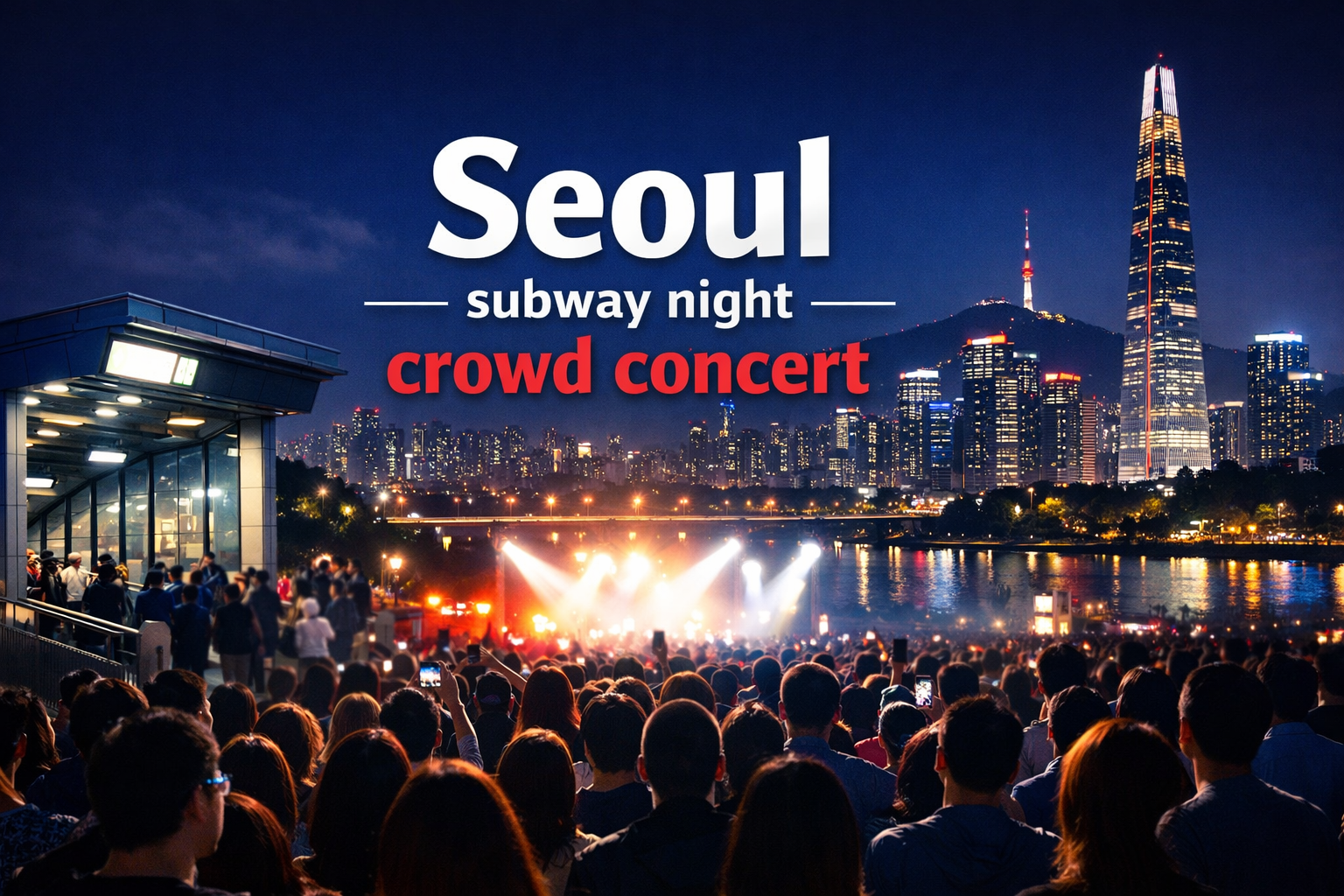
Seoul's concert scene operates on a scale that most cities simply cannot match. Traditional venues like Jamsil Olympic Stadium hold 70,000+ fans, but outdoor events at Gwanghwamun Square and Seoul Plaza can draw crowds exceeding 100,000 — all in the heart of the city, surrounded by limited exit routes and a subway system approaching its final runs.
Unlike cities such as Tokyo or London that run some form of late-night rail service, Seoul's subway system stops running around midnight. A concert finishing at 10:30 PM sounds manageable — but factor in 100,000 fans exiting simultaneously, and catching the last train becomes a genuine race against the clock.
After a massive outdoor concert at Gwanghwamun Square ended just after 10:40 PM, the scene outside was unlike anything expected. An estimated 100,000 fans flooded the plaza simultaneously. Every attempt to open Kakao T resulted in a loading spinner — the app was lagging badly under surge demand, with estimated wait times jumping past 40 minutes for any available driver.
Rather than standing still and watching the last train window close, the decision was made to move. Walking south along Sejong-daero toward Seoul City Hall took about 7 minutes on foot. From the Kyobo Building bus stop (교보문고 앞), the N26 night bus was already running — boarded with a T-money tap, no queue, no drama. The crowd that stayed near the plaza was still waiting for taxis well past 1 AM.
The lesson: when apps fail, your feet and a bus stop map are the real backup plan.
One more factor worth noting: Seoul's metropolitan area is enormous. Depending on where accommodation is located, the journey can span multiple subway lines. Missing even one connection can mean a much longer night than expected — which is exactly why having a layered transport plan matters.
Last Subway Times After Major Concert Venues
The Seoul Metro is the fastest and most affordable way to travel after a concert. Most lines operate until between 11:30 PM and 12:30 AM, but the exact last train varies by line and direction. For Gwanghwamun-area events especially, the window is tight — always check before the encore begins.
Major Concert Venues and Nearest Subway Stations (2026)
| Venue | Nearest Station | Subway Line | Approx. Last Train |
|---|---|---|---|
| Gwanghwamun Square 광화문광장 / Seoul Plaza |
Gwanghwamun Station 광화문역 + City Hall Station 시청역 |
Line 5 Line 1 / Line 2 |
~11:50 PM (Line 5) ~12:00 AM (Line 1/2) |
| Olympic Stadium Jamsil |
Sports Complex Station 종합운동장역 |
Line 2 / Line 9 | ~12:00 AM |
| KSPO Dome Olympic Park |
Olympic Park Station 올림픽공원역 |
Line 5 | ~11:50 PM |
| Gocheok Sky Dome | Guil Station 구일역 |
Line 1 | ~11:40 PM |
| Jamsil Arena | Jamsil Station 잠실역 |
Line 2 / Line 8 | ~12:00 AM |
| Seoul World Cup Stadium Sangam |
World Cup Stadium Station 월드컵경기장역 |
Line 6 | ~11:45 PM |
For real-time subway updates and official schedule confirmation, visit the Seoul Metropolitan Government Official Website.
How to Save Up to 53% on Public Transport: K-Pass Korea Guide Using a T-money or K-Pass card makes subway exits faster — especially important when racing for the last train from Gwanghwamun or Jamsil.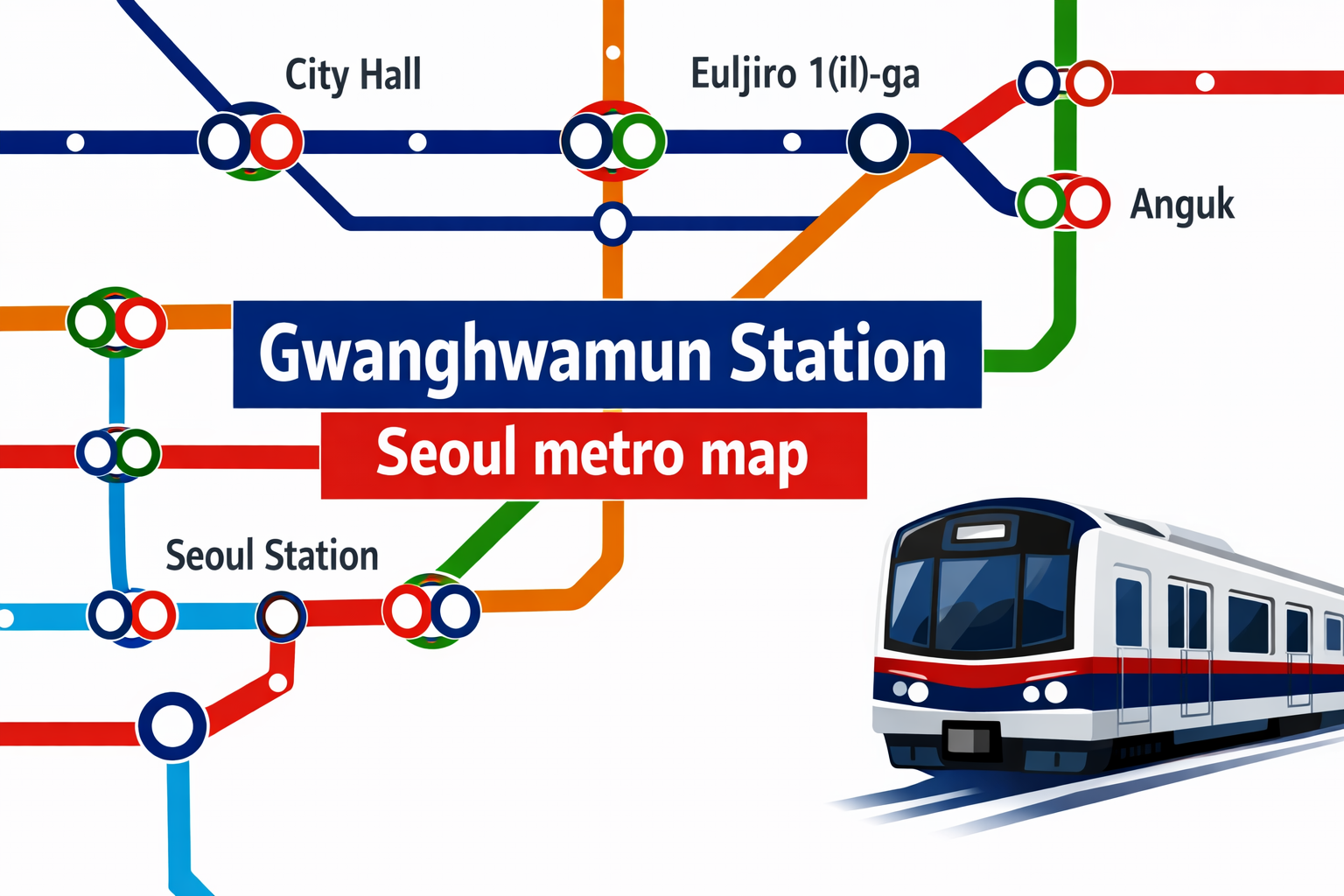
Late-Night Buses and Night Owl Routes in Seoul
Missed the last subway? Seoul's Night Owl Bus system — known as N-Bus routes — is the most reliable public option after midnight. These buses run specifically to fill the gap when the subway stops, accept T-money card payment, and cover every major district including Gwanghwamun, Hongdae, and Gangnam.
N-Buses are regular city buses with route numbers starting with "N" (e.g., N13, N26). They run from around midnight until 5 AM, cost ₩2,150–₩2,650 KRW per ride with T-money, and stop at well-known landmarks — making them easy to navigate even without Korean language skills.
Key Night Bus Routes — Including Gwanghwamun Coverage (2026)
| Route | Area Covered | Gwanghwamun Stop | Operating Hours | Frequency |
|---|---|---|---|---|
| N26 | Gangnam ↔ Gwanghwamun ↔ Northern Districts Gangnam · Jongno · Gwanghwamun · Dobong |
교보문고 앞 (Kyobo Building stop, Sejong-daero) |
00:20 – 05:00 | ~35 min |
| N37 | Central Seoul Loop Hongdae · Sinchon · City Hall · Dongdaemun |
서울시청 앞 (Seoul City Hall stop) |
00:00 – 05:00 | ~30 min |
| N13 | Eastern Seoul ↔ Central Seoul Jamsil · Gangnam · City Hall |
서울시청 앞 (Seoul City Hall stop) |
00:30 – 05:00 | ~30 min |
| N61 | Western Seoul ↔ Sangam World Cup Stadium · Mapo · Yeouido |
미경유 (Does not pass Gwanghwamun) |
00:10 – 04:50 | ~40 min |
Taxi, Ride Apps, and Alternative Transport Options
When subway and night buses don't cover the route — or when the wait feels too long — taxis are the most flexible option after a Seoul concert. However, post-concert taxi demand near Gwanghwamun and Jamsil is among the highest in the city. Understanding how to work the system smartly is the difference between a 10-minute wait and a 90-minute one.
Taxi Options Available in Seoul (2026)
| Type | How to Use | Best For | Notes |
|---|---|---|---|
| Street Taxi 일반택시 |
Hail on street or taxi stand | Short distances, when apps are slow | Hard to find right after concerts |
| Kakao T App | Book via app, meet at pinned location | Most foreign visitors — English UI available | Most recommended for foreigners |
| Uber Taxi | Book via Uber app | Visitors already using Uber globally | Operates via licensed Korean taxis; limited vs. Kakao T |
| Deluxe Taxi 모범택시 |
Black cab, metered | Late-night comfort, longer distances | ~2× regular fare; easier near hotels & major intersections |
Download the Kakao T app before arriving in Korea. Foreign credit cards (Visa/Mastercard) can be registered directly. Once set up, booking is as simple as dropping a pin. It works in English and shows live driver location — ideal when communication is a barrier. After large Gwanghwamun events, move at least 3–4 blocks away from the plaza before requesting a ride — surge demand at the epicenter causes both app lag and price increases.
Smart Alternatives When Everything Is Crowded
- Walk to a side street before opening the app — For Gwanghwamun events, heading toward Cheonggyecheon or Insadong-gil gives immediate access to lighter traffic zones where drivers can actually reach the pickup point.
- Stay nearby for 1–2 hours — The Gwanghwamun area has excellent 24-hour cafes, convenience stores (CU, GS25), and late-night restaurants. Waiting 60–90 minutes dramatically improves both taxi availability and Kakao T wait times.
- Move toward a larger transport hub — From Gwanghwamun, a 10-minute walk to Jonggak or Euljiro 1-ga stations (Lines 1/2) opens up additional late transport options and a calmer taxi environment.
- Book accommodation near the venue — For major multi-day outdoor events at Gwanghwamun or indoor events at Jamsil, booking a hotel within walking distance eliminates the transport problem entirely.
What to Do After the Concert — Midnight Seoul Awaits
The night doesn't have to end when the music stops. While waiting for crowds to thin near Gwanghwamun or Hongdae, explore what Seoul's late-night scene has to offer — from hidden wine bars to post-concert K-beauty recovery.
Euljiro Hidden Wine Bars & Craft Beer Pubs: Seoul's Best-Kept Nightlife Secret Perfect for killing 1–2 hours post-concert near Gwanghwamun while waiting for taxi queues to clear — Euljiro is a 10-minute walk from City Hall. Best Luxury Jjimjilbangs & Spas in Seoul for Tourists 2026 Missed the last train entirely? A 24-hour jjimjilbang near the venue is the ultimate late-night backup plan — rest, recover, and head home after the first morning subway.Final Takeaway
Whether leaving Gwanghwamun Square after a 100,000-person outdoor event or exiting Jamsil after a sold-out arena show, the strategy is the same: check last subway times before the encore, know your nearest N-Bus stop by name in Korean, and have Kakao T pre-loaded with a foreign card. Plan once — enjoy every concert without the post-midnight stress.


