No Apple Pay? The Ultimate Payment Guide for Seoul Pop-ups & Merch
I stood in a merchandise queue outside Gwanghwamun Square for nearly two hours. It was a BTS pop-up goods event, and the line snaked all the way back toward the Kyobo Bookstore corner. When I finally reached the booth and tapped my iPhone to pay, the terminal beeped twice — and rejected the payment. Apple Pay. Declined. The staff member shrugged apologetically; they saw it happen all the time with foreign phones. I had exactly one option left: the NAMANE card I'd loaded with ₩80,000 the night before, almost as an afterthought. It went through instantly. Without it, I would have walked away from a limited-edition item I'd traveled from overseas specifically to buy. That experience is why I wrote this guide.
Planning to buy BTS merch in Seoul or shop at a K-pop pop-up store? Despite being a leader in cashless Korea technology, Apple Pay Korea 2026 still fails at many temporary booths. This guide covers the NAMANE card, T-money foreigner cards, Weverse Shop offline queues, and Travel Wallet — everything needed to never miss a limited merchandise drop, whether at Seongsu, Myeongdong, or the Gwanghwamun pop-up merch zone.
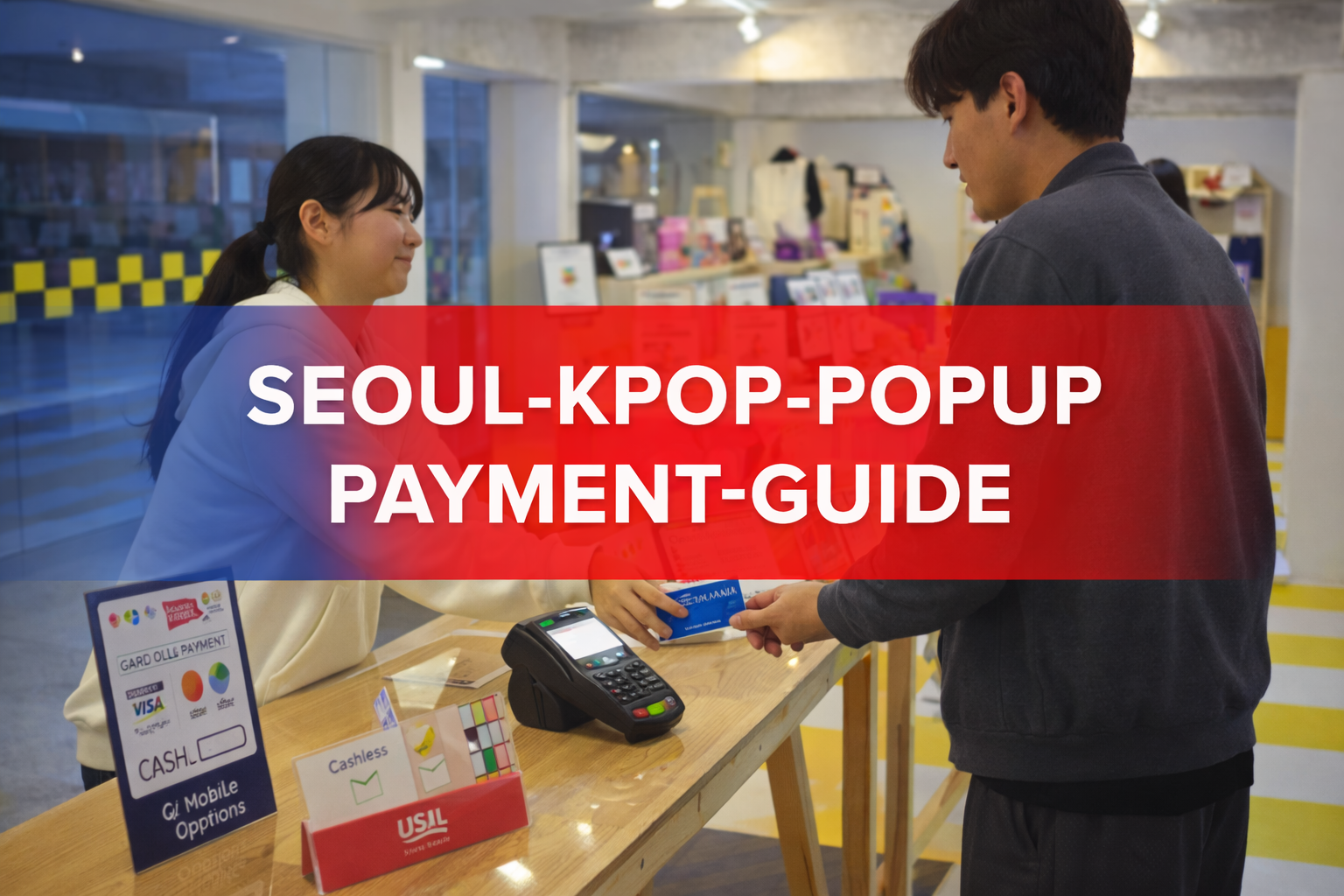
Why Apple Pay Still Fails at Seoul Pop-up Stores
Visitors arriving in Seoul often assume Apple Pay Korea 2026 works seamlessly everywhere — after all, Korea is globally recognized for its advanced tech ecosystem. The reality, however, is more complicated, especially inside temporary K-pop pop-up stores.
Pop-up stores in districts like Myeongdong, Seongsu, and Hongdae typically run on temporary POS (Point of Sale) systems built primarily for domestic Korean payment networks. These systems are set up quickly for short-term events and are often optimized for speed over compatibility. They tend to prioritize:
- Korean domestic credit cards (issued by local banks)
- Local mobile wallets such as Samsung Pay (domestic version) or Kakao Pay
- Prepaid transit-style payment cards like T-money or Cashbee
- Offline QR code payment solutions
Apple Pay's support in Korea expanded in 2023 through Hyundai Card, but as of 2026, terminal compatibility remains inconsistent. Many pop-up merchandise booths — including those at Gwanghwamun temporary merchandise zones — use simplified POS hardware that cannot process Apple Pay NFC transactions from internationally-issued cards.
For international fans trying to buy BTS merch in Seoul, a checkout failure at the register is not unusual — even when the same phone wallet works perfectly in other countries.
How Cashless Korea Actually Works for Foreign Fans
South Korea is one of the most advanced cashless Korea societies in the world. The vast majority of transactions in Seoul are completed digitally — physical cash is rarely needed for daily life. However, the Korean payment ecosystem developed along a different path from Western mobile wallet systems.
Instead of building around Apple Pay or Google Pay, Korea's infrastructure grew through domestic card networks, prepaid transportation cards, and bank-linked mobile apps. For foreign visitors, this creates an important knowledge gap that can derail a shopping trip to a K-pop pop-up store.
The payment environment for foreign visitors can be understood through three main layers:
| Payment Layer | Typical Users | Where It Works | Pop-up Store Use |
|---|---|---|---|
| International Credit Cards (Visa / Mastercard) |
Tourists | Hotels, large malls, department stores | Limited — may fail |
| Local Payment Systems (Kakao Pay, Naver Pay) |
Korean residents | Online shopping, delivery apps, most retail | Not available to foreigners |
| Prepaid Transit Cards (T-money, NAMANE) |
Locals & tourists | Transport, convenience stores, some pop-ups | Best option for foreigners |
The third layer — prepaid cards — is the most practical solution for international fans attending limited K-pop pop-up merchandise events. Many small vendors accept prepaid cards because they run on simple offline terminals that do not need a live internet connection to process payments.
Weverse Shop Queue vs. On-site POS: What's Actually Different
Many fans prepare for merchandise drops using the Weverse Shop app, assuming the in-app pre-order flow means smooth on-site pickup. In practice, the Weverse Shop queue and the physical POS terminal at the booth are two entirely separate systems. Here's how they differ:
- Weverse Shop app queue: Processes payment online, in advance. Accepts international cards and PayPal in many cases. No in-person terminal involved.
- On-site merchandise booth POS: A physical card reader, often a compact domestic Korean terminal. This is where Apple Pay fails and where a NAMANE card becomes essential.
- Walk-up cash / card lines: On-the-day physical queue at events like the Gwanghwamun pop-up zone. These use the most basic POS setups — international NFC is least reliable here.
This is precisely why experienced visitors carry cards such as the NAMANE card or a T-money foreigner card when attending merchandise drops at temporary Seoul pop-ups.
For a complete guide to navigating Seongsu — one of Seoul's most active pop-up districts — the Seongsu-dong Popup Store Map: March 2026 Complete Guide on TalkMaru covers store locations, hours, and shopping tips in detail.
NAMANE Card: The Smart Payment Hack for BTS Merch in Seoul
When Apple Pay Korea 2026 fails at the merchandise counter, the NAMANE card has rapidly become the go-to backup for international K-pop fans visiting Seoul — and for good reason.
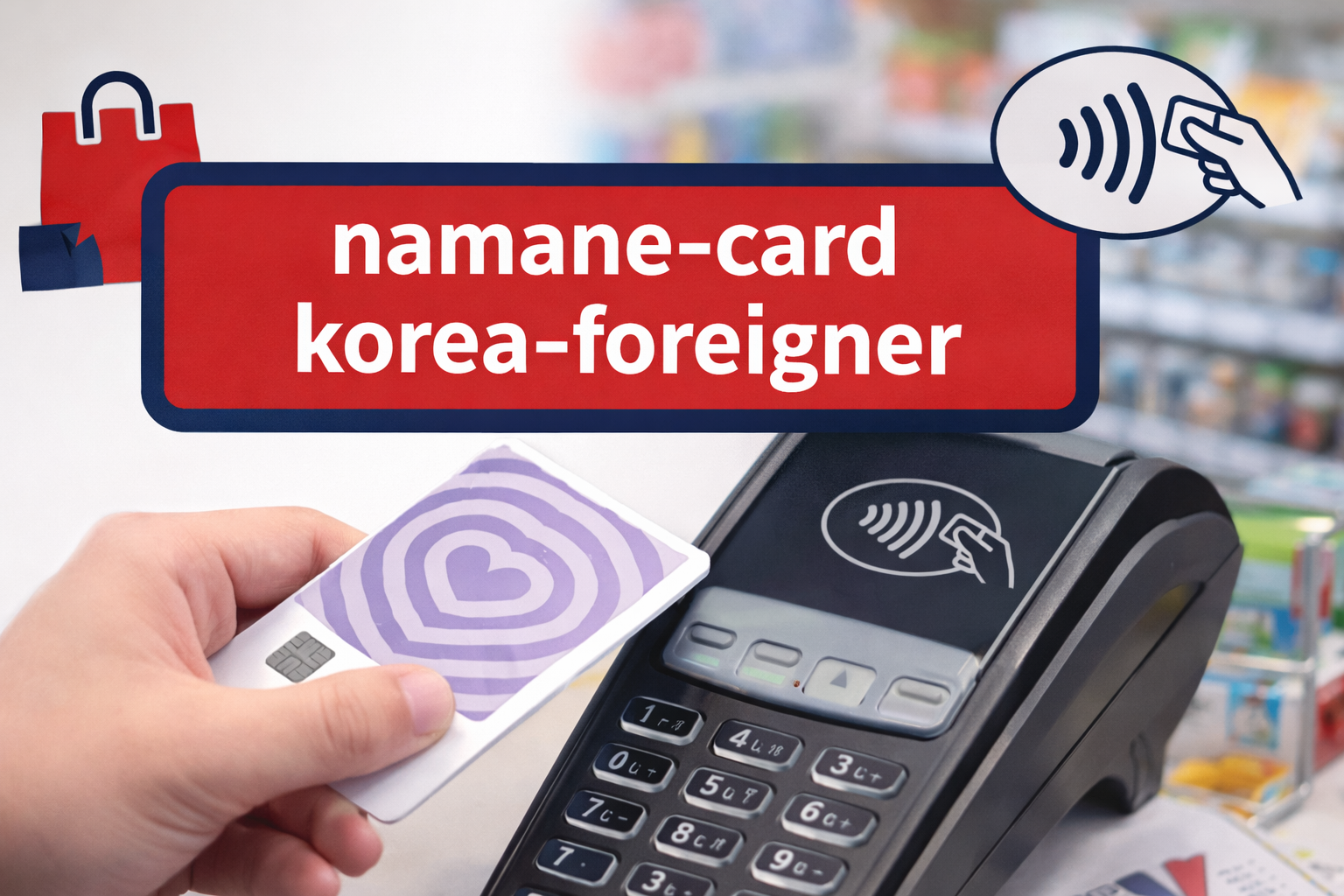
For fans attending temporary K-pop pop-up stores or merchandise booths at events like the Gwanghwamun pop-up merch zone, the NAMANE card offers several practical advantages over foreign credit cards:
In practice, combining a NAMANE card with a standard international credit card dramatically reduces the risk of payment failure during limited merchandise drops. Think of the NAMANE card as the insurance policy — the backup that activates when every other method fails.
- Download the NAMANE card app (available on iOS and Android)
- Verify identity with passport information
- Load Korean won via linked foreign card or convenience store top-up
- Use the physical or virtual card at participating terminals
- Keep a minimum balance of ₩50,000–₩100,000 on event days
- Top up the night before — convenience stores near Gwanghwamun and Hongdae are open 24 hours
Before attending any K-pop concert merchandise event, checking TalkMaru's guide on how to buy K-Pop tickets on NOL World (Interpark Global) is also recommended — the same payment preparation logic applies to both concert tickets and on-site merch purchases.
T-money for Foreigners: Where It Works (and Where It Doesn't)
The other essential payment tool for Seoul visitors is the T-money foreigner card. Most travelers encounter it first at the airport or subway station, loaded up for bus and metro rides. However, T-money's usefulness extends well beyond transportation.
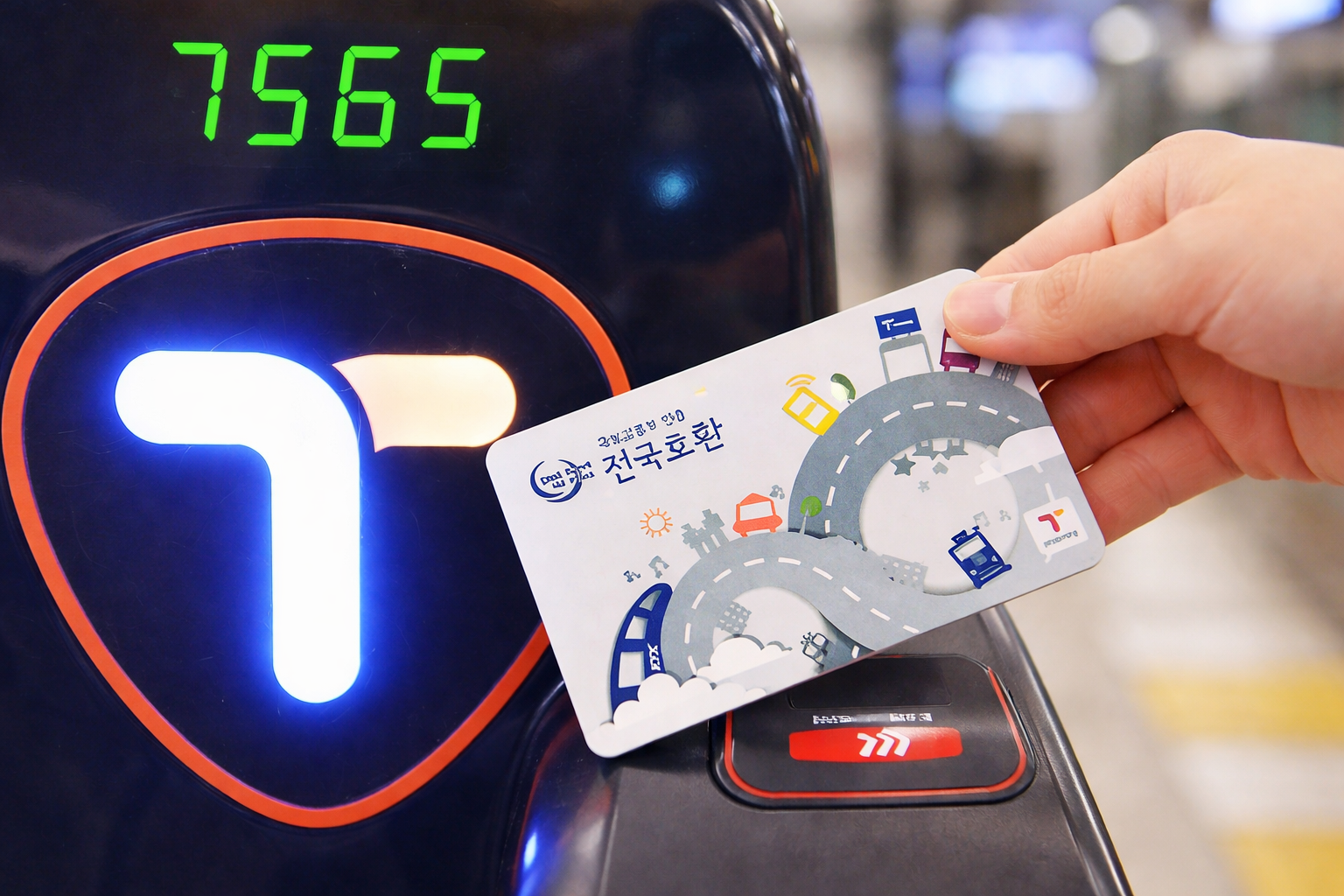
Beyond transportation, T-money can also function as a small-value payment tool at specific locations. The table below summarizes where the T-money foreigner card works — and where it falls short for K-pop pop-up store shopping:
| Category | Where T-money Works | Limitations to Know |
|---|---|---|
| Transport | Subway, buses, airport rail | No limitation — works nationwide |
| Retail | GS25, CU, 7-Eleven convenience stores | Small purchases only (under ~₩50,000 per tap) |
| Vending Machines | Most T-money-enabled machines | Items only, no cash withdrawal |
| Pop-up Stores | Some booths in larger venues | NOT accepted at all pop-up shops — especially unofficial or temporary booths |
| Merchandise Booths | Occasionally at official events | Cannot replace credit card for high-value merch transactions |
| Weverse Walk-up Booths | Rarely accepted | Weverse on-site POS typically does not integrate T-money |
The core limitation is simple: T-money was built for small, frequent, low-value transactions. When a merchandise item costs ₩80,000 or more — as is common for official BTS or K-pop branded goods — the T-money system may decline the transaction or require a supplementary payment method.
Because of these limitations, seasoned K-pop fans typically carry both a T-money card and a NAMANE card when attending merchandise events — using T-money for transit and small purchases, and the NAMANE card for actual merch transactions.
For those also planning to open a Korean bank account for longer stays — which would unlock access to Korean mobile payment apps — the step-by-step walkthrough at 5 Easy Steps to Open a Korean Bank Account (2026 Foreigner Guide) on kimchilandguide.com is a useful next step.
Quick FAQ for BTS Concert & K-pop Pop-up Goers
Does Apple Pay work at BTS pop-up stores in Seoul?
Not reliably. Most BTS and K-pop pop-up merchandise booths use simplified Korean domestic POS terminals that do not support Apple Pay NFC from internationally-issued cards. Always carry a NAMANE card or cash as a backup before joining the queue.
How do I pay at a BTS pop-up store in Seoul as a foreigner?
The most reliable method is a NAMANE prepaid card loaded with Korean won, combined with an international Visa or Mastercard. T-money works for small purchases but may decline high-value merchandise transactions over ₩50,000.
Where can I get a NAMANE card in Seoul?
Download the NAMANE app (iOS and Android), verify your identity with a passport, and top up at any convenience store kiosk or via a linked foreign card — no Korean bank account needed. Allow 10–15 minutes for setup on your first use.
Can I use T-money to buy K-pop merch at a pop-up?
T-money works at subway stations, buses, and convenience stores, but most pop-up merchandise booths do not accept it — especially for items priced above ₩50,000. Use T-money for transit and a NAMANE card for merch to cover all scenarios.
Payment Prep Saves the Day
Navigating cashless Korea as a foreign fan is straightforward with the right tools. Carry an international card, a NAMANE card, and a T-money foreigner card — and no Seoul merchandise drop, Weverse Shop walk-up booth, or Gwanghwamun pop-up line will ever be out of reach. The two hours in queue are worth it. The payment failure doesn't have to be.


