Korea's trash and recycling rules (쓰레기 분리수거 규정) in 2026 are among the strictest in Asia. Many foreigners living in Korea receive unexpected recycling fines (과태료) because they misunderstand the garbage separation system (분리배출), designated trash bags (종량제 봉투), or food waste disposal (음식물 쓰레기 처리) rules. This guide explains every step of the Korea garbage system so any foreigner can comply confidently and avoid illegal dumping penalties.
Why Korea's Trash & Recycling Rules Are Strict in 2026
Korea operates under the Volume-Based Waste Fee System (종량제 — 쓰레기 종량제). This means residents effectively pay per bag of general waste they produce — the more general waste discarded, the more money spent. The core goal is to reduce landfill use and promote active recycling. In 2026, enforcement has intensified with CCTV monitoring (CCTV 감시), district inspection teams, and significantly higher fines than previous years.
The challenge for newcomers is that rules are not identical across all districts (구 — 자치구). Each municipality may have slight differences in collection schedules and accepted recyclable categories. The Seoul Metropolitan Government (서울특별시) provides localized recycling guidelines in English — checking this resource before disposal is strongly recommended.
How the Volume-Based System Works
Think of it simply: general waste (일반 쓰레기) costs money to dispose of, while recyclables and food waste have their own separate low-cost or free channels. The designated trash bag (종량제 봉투) acts as a "fee tag" — buying that bag is how the disposal fee is paid to the district. Throwing waste into any other bag is treated the same as not paying, and is immediately subject to fines.
District Variation & Where to Check Local Rules
Each district (구) posts its own collection schedule at apartment bulletin boards or the local community center (주민센터). For Seoul-wide official English guidance, visit english.seoul.go.kr. For tourism-related living information, the Korea Tourism Organization (한국관광공사) also maintains practical guides for long-stay visitors.
Korea Garbage Separation System: 3 Categories Explained
All waste in Korea must be sorted into three primary categories before disposal. Mixing categories — for example, placing food waste inside a general trash bag — is one of the most common violations among foreigners and results in immediate fines if detected.
| Category | Korean Name | Main Examples | Disposal Method |
|---|---|---|---|
| General Waste | 일반 쓰레기 | Contaminated paper, broken ceramics, diapers, rubber |
Designated trash bag (종량제 봉투) only |
| Food Waste | 음식물 쓰레기 | Leftovers, vegetable peels, fruit rinds (no bones or shells) |
Food waste bin or RFID container (RFID 음식물 수거함) |
| Recyclables | 재활용품 | PET bottles, cans, glass, cardboard, clean plastics |
Separate transparent bags or designated recycling bins |
Food Waste Rules: What Can and Cannot Go In
Food waste disposal is where most beginners make critical mistakes. Only soft, compostable organic material is accepted. Items that cannot be composted must go into general waste.
- Accepted: Cooked rice, noodles, vegetable scraps, fruit peels, bread, meat scraps (no bones)
- Not accepted: Fish bones, chicken bones, shellfish shells, fruit seeds/pits, dry onion skin, tea bags, toothpicks
- Not accepted: Any liquid — drain all broth and moisture before disposal
- Not accepted: Plastic wrap, rubber bands, or packaging of any kind
Recyclables: How to Sort and Prepare Correctly
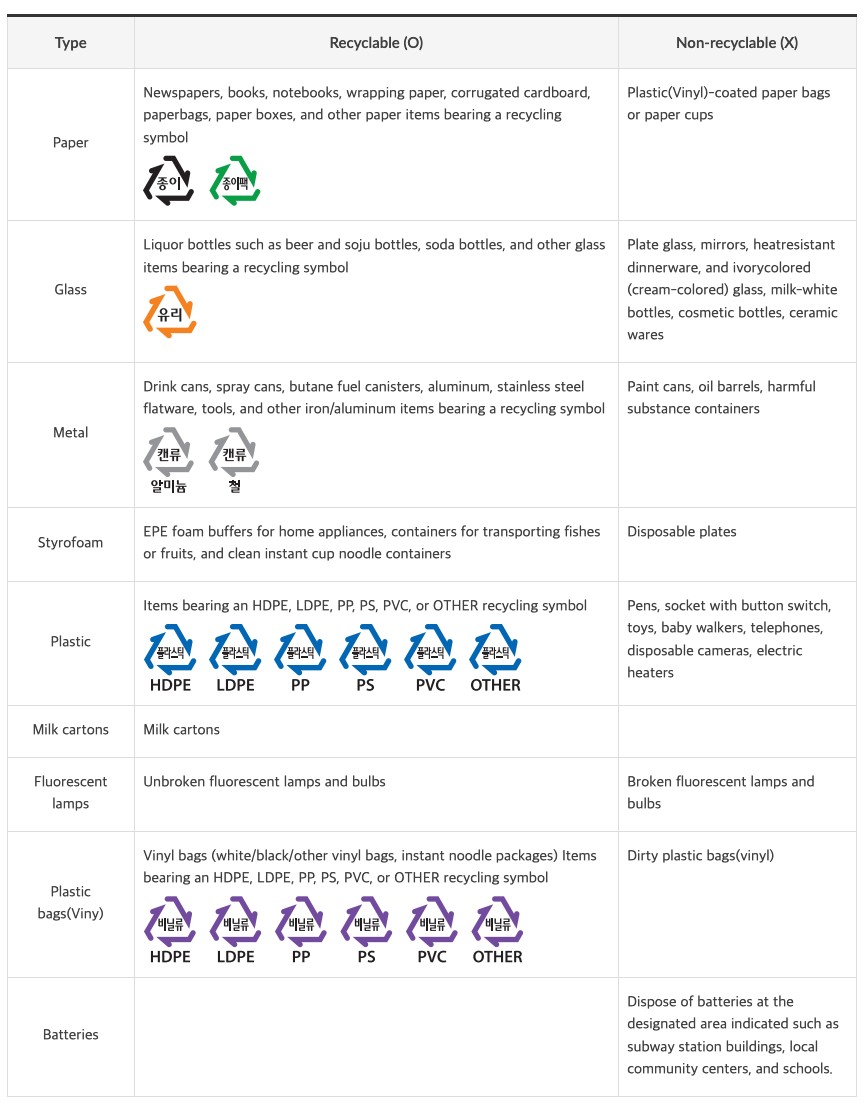
Recyclables must be cleaned before disposal. A plastic bottle with liquid inside, or a cardboard box with food grease, is classified as general waste — not recyclable. This rule surprises many newcomers. A quick 10-second rinse prevents both rejection and fines.
- Paper / Cardboard (종이류): Flatten boxes, remove tape and staples, keep dry
- PET Bottles (페트병): Remove cap and label, rinse, crush flat
- Glass (유리병): Rinse; separate by color if indicated locally
- Cans (캔류): Rinse, crush if possible
- Plastics (플라스틱): Check for the recycling symbol — not all plastics are accepted
- Styrofoam (스티로폼): Clean only; heavily contaminated styrofoam goes to general waste
Final Compliance Checklist for Foreign Residents
- Purchase district-specific designated trash bags (종량제 봉투) from a local convenience store
- Separate food waste (음식물 쓰레기) carefully — remove bones, shells, liquid, and all packaging
- Rinse all recyclables before placing them in the recycling bin
- Check the local pickup schedule posted at the building entrance or community center (주민센터)
- Purchase a large waste sticker (대형 폐기물 스티커) before discarding any furniture
- Call 1599-0903 to schedule free large appliance (가전제품) collection
- Confirm district-specific rules at Seoul Metropolitan Government (서울특별시 영문)
Getting trash and recycling right is one of the first practical steps to daily life in Korea. Once waste management is sorted, the next challenge for most newcomers is navigating an unfamiliar city — see Stop Getting Lost! Which Korean Map App is Truly Best for Foreigners? (2026 Tested) for a tested side-by-side comparison. For those still completing residency setup, the 2026 ARC Guide: 5 Common Mistakes That Will Reject Your Application covers address registration errors that directly affect fine delivery and administrative status.
Korea's trash and recycling rules (분리수거 규정) are strict but entirely manageable. Buying the correct designated trash bag (종량제 봉투), separating food waste properly, and rinsing recyclables before disposal eliminates virtually all fine risk and directly supports Korea's national environmental sustainability goals.


