What Is March 1st in Korea? Samiljeol and the Korean Independence Day Explained
The first time a foreigner wakes up in Korea on the morning of March 1st, the view from the window is unlike any other day — every apartment balcony in sight has a Taegeukgi (태극기) hanging from it, and the streets are quieter than usual. That image alone tells you something historically significant is happening. Every year on March 1st, Korea observes Samiljeol (삼일절) — one of the most important Korean national holidays in the country's history. Officially known as Independence Movement Day, Samiljeol commemorates the 1919 March First Movement, when millions of Koreans peacefully declared independence from Japanese colonial rule. For any foreigner living in or visiting Korea, understanding what Korean Independence Day truly represents is key to connecting with Korean culture and the spirit of the Korean independence movement.
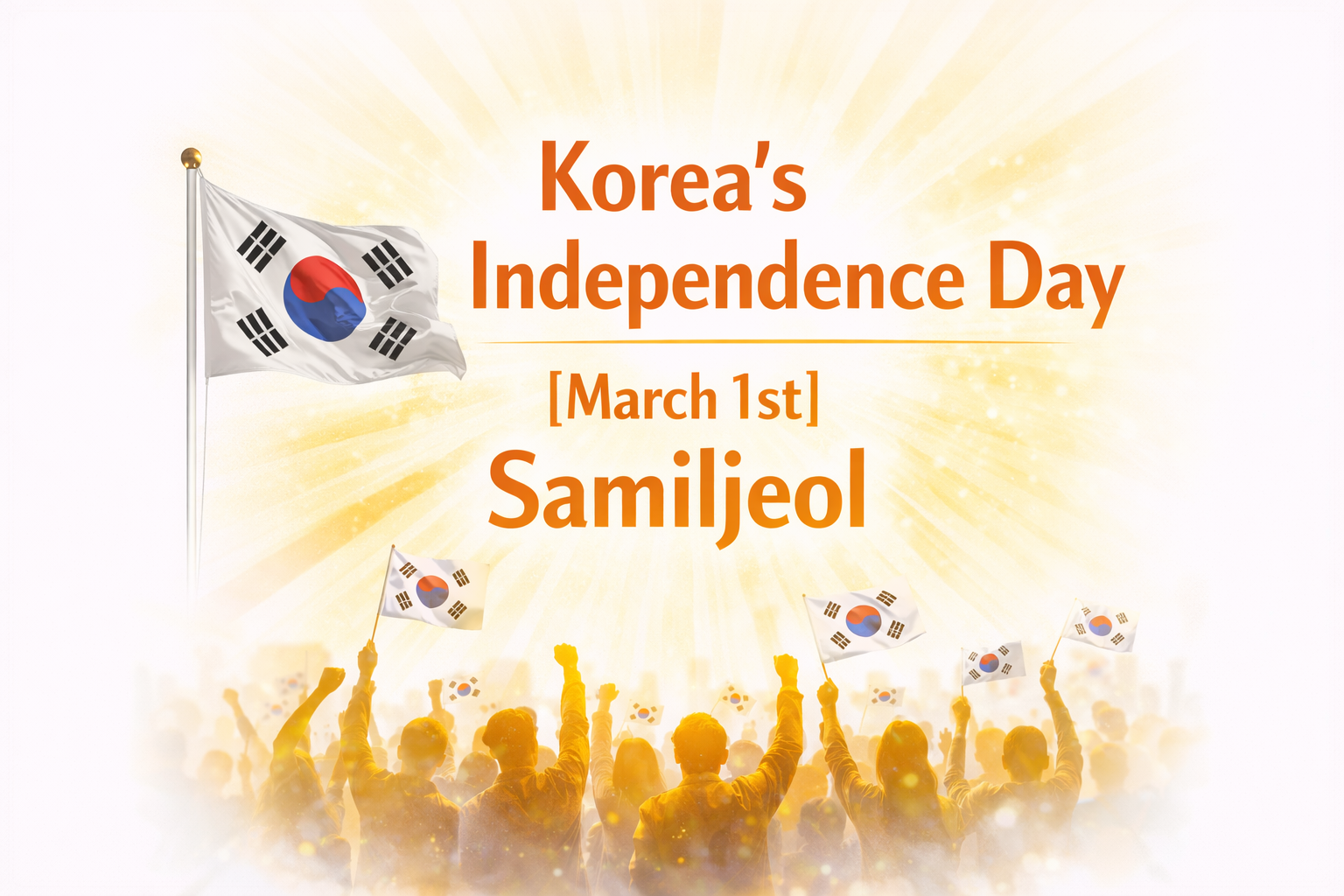
What Is Samiljeol? Korea's March 1st National Holiday
Samiljeol (삼일절) literally means "March First Day" in Korean — sam (삼) is three, il (일) is one, and jeol (절) refers to a nationally designated day. It falls on March 1st every year without exception and is classified as a national public holiday (공휴일), meaning government offices, schools, banks, and most businesses are officially closed.
Unlike seasonal or cultural festivals, Samiljeol is a deeply patriotic and historical observance. Official government ceremonies take place nationwide — most prominently at the Independence Hall of Korea (독립기념관) in Cheonan, South Chungcheong Province. Throughout the day, the Korean national flag, Taegeukgi (태극기), is displayed on homes, apartment buildings, and public institutions as a collective act of national remembrance.
For many newcomers to Korea, seeing entire streets covered in flags simultaneously can feel unexpected. Knowing why March 1st in Korea carries such emotional and historical weight makes the experience far more meaningful — and helps any foreigner engage respectfully with the day.
| Category | Details |
|---|---|
| Date | March 1st (fixed, every year) |
| Korean Name | 삼일절 (Samiljeol) |
| Official English Name | Independence Movement Day |
| Holiday Type | National Public Holiday (공휴일) |
| Main Ceremony Venue | Independence Hall of Korea, Cheonan (천안 독립기념관) |
| Flag Display | Taegeukgi (태극기) displayed nationwide from dawn to dusk |
| Business Status | Most offices, banks, and schools closed — transport runs on holiday schedule |
The 1919 March First Movement: Korea's Declaration of Independence
To truly understand Samiljeol, it is essential to look at the historical context of 1919. At the time, the Korean Peninsula was under Japanese colonial rule, which had begun formally in 1910. Under this occupation, Koreans lost political autonomy, cultural freedoms, and the right to self-governance. The use of the Korean language in schools and public settings was suppressed, and Korean land and resources were systematically exploited.
On March 1, 1919, a coalition of 33 Korean representatives — religious leaders, educators, and intellectuals — gathered at Taehwagwan Restaurant in Seoul and simultaneously at Tapgol Park (파고다공원) to publicly read and sign the Korean Declaration of Independence. This single act ignited a nationwide wave of peaceful protests. Crowds of Koreans — from students and farmers to merchants and clergy — took to the streets in every province, chanting "Manse!" (만세 — "Long live Korea!") with their arms raised.
Historians estimate that over 2 million people participated in demonstrations during the following weeks. The Japanese colonial government responded with force — thousands were killed, tens of thousands wounded, and over 45,000 were arrested and imprisoned. Yet despite the brutal suppression, the movement left a permanent mark on Korean history and inspired independence movements across Asia.
The March First Movement directly led to the formation of the Provisional Government of the Republic of Korea in Shanghai, giving the independence movement a formal international platform. Today, official Samiljeol ceremonies include public readings of the Declaration of Independence, moments of nationwide silence, and the singing of the national anthem — a tradition that connects every generation to the events of 1919.
Insider Tip: The Independence Hall of Korea (독립기념관) in Cheonan is the country's most comprehensive museum on the independence movement — and admission is free on March 1st. It houses seven major exhibition halls, outdoor monuments, and the main national Samiljeol ceremony. From Seoul, it is roughly 1.5 hours by KTX or express bus from Seoul Station — one of the most worthwhile historical trips for any foreigner living in Korea.
Korean history runs far deeper than most foreigners expect. For a practical guide to everyday cultural respect — including behaviors that can unintentionally offend Koreans — the Don't Be Rude in Korea: 5 Cultural Taboos You Must Avoid guide at KimchiLandGuide is essential reading.
Why Koreans Display the Taegeukgi on March 1
One of the most striking traditions on Samiljeol is the nationwide display of the Taegeukgi (태극기), the Korean national flag. On this day, it appears simultaneously on apartment balconies, house gates, storefronts, and public buildings — creating an unmistakable visual landscape of red, white, blue, and black across every city and village in the country.
The Taegeukgi carries deep symbolic meaning. The red and blue circular design at the center — called the taeguk (태극) — represents the balance of opposing cosmic forces: positive and negative energy, fire and water, heaven and earth. The four black trigrams (괘) at each corner represent fundamental natural elements — heaven, earth, water, and fire. The white background symbolizes purity and peace. Together, the flag expresses harmony, balance, and the continuous cycle of life — values central to Korean identity.
Displaying the Taegeukgi on Samiljeol is not merely tradition — it is a civic act of collective remembrance. It honors the protesters of 1919 who marched under this same flag while risking — and often giving — their lives for Korean sovereignty. The Korean government officially designates several national holidays, including Samiljeol, as flag-display days (국기게양일). Citizens are encouraged to hang the flag correctly from dawn until dusk.
Flag Etiquette for Foreigners: The Taegeukgi is a symbol of deep national respect and must never be used as a casual decoration, clothing accessory, or prop. On Samiljeol, a visibly tattered or damaged flag is considered disrespectful — if displayed, it should be clean, upright, and removed at sunset. It should not be left outside during heavy rain. Foreigners are not expected to display the flag themselves, but should always treat it with the same reverence as any national symbol.
How Foreigners Can Respect Samiljeol in Korea
Being in Korea on March 1st is a unique opportunity to witness one of the country's most historically significant days. A few simple guidelines go a long way in showing genuine cultural awareness and respect.
First, recognize that Samiljeol is a solemn historical day. While it is a public holiday, it is not a festival centered on entertainment. Loud group activities near ceremony venues or memorials are considered insensitive. Being mindful of the atmosphere — especially in the morning hours when official ceremonies are broadcast nationwide — is important.
Second, if Koreans around you seem particularly reflective or quiet during the day, that is completely normal and worth respecting. The March First Movement was not a distant abstract event for many Korean families — it is part of living memory, passed down through generations. Treating the day with quiet awareness rather than casual indifference makes a lasting impression.
Third, learning even the basics about the 1919 Independence Movement before or during your time in Korea demonstrates genuine cultural engagement. Knowing what Samiljeol represents helps you understand the country's modern identity, democratic values, and the deep emotional weight that historical independence still carries for every Korean.
| Do | Avoid |
|---|---|
| Observe flag displays respectfully | Using the Taegeukgi as casual decoration |
| Stay aware of solemn ceremony hours | Loud, disruptive behavior near memorials |
| Learn the basics of the 1919 movement | Treating the day as just another day off |
| Watch official broadcast ceremonies | Dismissing the historical significance |
| Visit the Independence Hall of Korea | Making insensitive historical comparisons |
Conclusion: KimchiLandGuide's Verdict
Samiljeol is Korea's most historically charged public holiday — a day when the entire nation pauses to honor the courage of those who stood for independence in 1919. For any foreigner in Korea, understanding what March 1st truly means transforms an ordinary holiday into one of the most memorable cultural experiences the country has to offer.
Planning to head out on the Samiljeol holiday? March is the perfect time to explore Seoul before the cherry blossom crowds arrive. Our sister blog TalkMaru has two must-reads for your spring outing: check out the Seongsu-dong Popup Store Map: March 2026 for the coolest spots to visit on the holiday, and pick up your spring skincare essentials with the Beauty of Joseon at Olive Young: Complete Guide 2026 — because great K-beauty weather starts in March.


