Korea's designated trash bag (종량제 봉투) system is a legal requirement for all residents — including foreigners. Many newcomers face unexpected garbage disposal fines (과태료) simply because they used the wrong bag or purchased one from the wrong district. This guide covers everything about buying designated trash bags in Korea (종량제 봉투 구매): where to buy, what sizes exist, how much they cost, and the Korean phrases needed at the convenience store — so any foreigner can comply with confidence from day one.
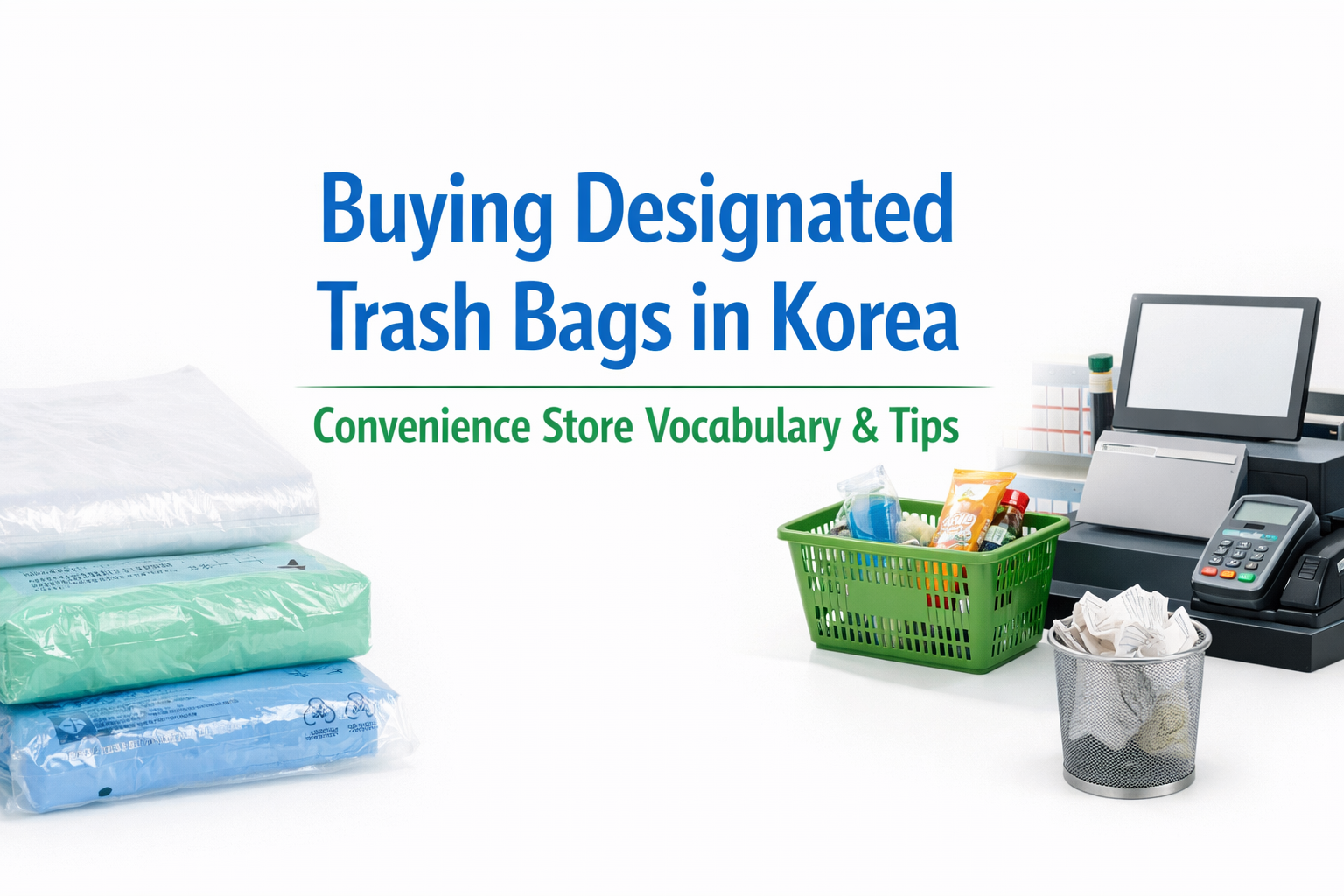
What Are Designated Trash Bags in Korea?
The Volume-Based Waste Fee System (쓰레기 수수료 종량제) is Korea's national waste policy. Under this system, residents do not pay a flat monthly fee for garbage collection. Instead, the cost of disposal is built into the price of the bag itself. Every time a designated trash bag is purchased, the disposal fee for that volume of waste is already paid. This makes it both a waste management tool and a cost-control mechanism for households.
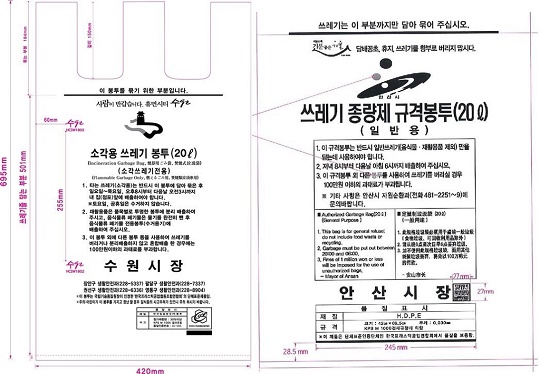
The official term for these bags is 종량제 봉투, which literally translates to "volume-rate garbage bag." They are issued and regulated by each local district (구/군) and are printed with the district name, volume, and an official government seal. Any bag without these markings is considered invalid and waste placed in it will either not be collected or result in a fine.
What Goes Inside a Designated Trash Bag
The designated trash bag is only for general household waste (일반 쓰레기). This includes non-recyclable, non-organic material such as used tissues, contaminated packaging, broken items, rubber goods, and mixed materials that cannot be separated. The following must never go inside:
- Food waste (음식물 쓰레기): Must go in a separate food waste bag or RFID bin
- Recyclables (재활용품): Plastic, paper, glass, cans — all go in separate clear bags or bins
- Large items (대형 폐기물): Furniture and appliances require a separate large-waste sticker
For a full breakdown of all three waste categories and recycling rules, see The Ultimate Guide to Korea's Trash & Recycling Rules (2026).
District-Specific Bags: A Rule Beginners Often Miss
Each district (구 — 자치구 / 군 — 자치군) issues its own designated bag. A bag purchased in Mapo-gu (마포구), for example, cannot legally be used in Gangnam-gu (강남구) — even though both are in Seoul. When moving to a new neighborhood, always purchase bags from a store within that specific district. The district name is always printed clearly on the front of the bag. For official district-level information in English, visit Seoul Metropolitan Government (서울특별시 영문).
Where to Buy, Sizes & Prices of Designated Trash Bags
Buying designated trash bags in Korea is straightforward once the right purchase location is known. No government office visit is required — they are available at everyday retail locations across all districts.
Where to Buy Designated Trash Bags (종량제 봉투 파는 곳)
| Purchase Location | Korean Name | Notes |
|---|---|---|
| Convenience Stores | 편의점 (GS25, CU, 7-Eleven, Emart24) |
Most accessible; open 24 hours; all common sizes available |
| Supermarkets | 대형마트 (Emart, Homeplus, Lotte Mart) |
Full size range; often sold in bulk packs of 10 bags |
| Local Grocery Stores | 동네 슈퍼마켓 | Neighborhood-specific bags; reliable for correct district |
| Community Center | 주민센터 / 동사무소 | Official source; useful for confirming correct district bag |
Sizes and Prices of Designated Trash Bags (2026)
Bag prices vary slightly by district and city. The table below shows the standard Seoul price range as a reference. Prices in other cities (경기도, 인천, 부산, etc.) may differ by 10–20%. All bags are sold individually or in bundles of 10 sheets (10매).
| Size | Best Suited For | Seoul Avg. Price (per bag, KRW) |
Other Cities Avg. (KRW) |
|---|---|---|---|
| 5L | Single-person household; small daily use |
130 | 120–150 |
| 10L | Studio apartment; 1–2 person household |
250 | 240–300 |
| 20L | Small family; most common size |
490 | 480–600 |
| 30L | Family household; higher waste volume |
740 | 700–850 |
| 50L | Large household; move-out cleanup |
1,250 | 1,200–1,500 |
Buying at the Store: Korean Phrases, Usage & Common Mistakes
For first-time buyers, the most stressful part is communicating at the store counter. The Korean phrases below are all that is needed to complete the purchase confidently. No fluency required — convenience store staff are accustomed to this request.
Korean Phrases for Buying Designated Trash Bags
| Korean Phrase | Pronunciation | Meaning |
|---|---|---|
| 종량제 봉투 주세요 | Jong-ryang-je bong-tu ju-se-yo |
Please give me designated trash bags |
| 10리터 있어요? | Ship li-teo iss-eo-yo? |
Do you have 10-liter bags? |
| 20리터 한 묶음 주세요 | I-ship li-teo han mu-kkeum ju-se-yo |
One pack of 20-liter bags, please |
| 일반 쓰레기 봉투 | Il-ban sseu-re-gi bong-tu |
General waste bag (to clarify the type) |
| 이 동네 봉투 맞아요? | I dong-ne bong-tu ma-ja-yo? |
Is this the correct bag for this neighborhood? |
The last phrase — "이 동네 봉투 맞아요?" — is particularly useful when buying from a store near a district boundary, where multiple district bags may be stocked side by side. Always check the district name printed on the bag before purchasing.
How to Use the Bag Correctly
Once the correct bag is purchased, proper usage is equally important:
- Fill only with general household waste (일반 쓰레기) — no food scraps, no recyclables
- Tie the bag securely closed before placing it at the designated disposal point
- Place it only on the designated collection day (수거일) — not earlier
- Apartment residents: follow the building's posted schedule and collection area
- Detached house residents (단독주택): place at the curb on the district's official pickup day
6 Common Mistakes Foreigners Make
These are the most frequent errors made by newcomers — all of which can result in uncollected waste or fines:
- Using a regular supermarket plastic bag instead of a designated bag
- Buying the wrong district's bag — always check the name printed on the bag
- Placing food waste (음식물 쓰레기) inside the general trash bag
- Putting recyclables (재활용품) such as plastic bottles or cans into the designated bag
- Leaving the bag out on the wrong day — missed pickups mean the bag stays uncollected
- Tying the bag loosely — an unsealed bag may be rejected or attract pests
Waste disposal is just one part of daily life in Korea that requires local knowledge. Another common early challenge is getting a working SIM card or eSIM on arrival — Korea SIM Card & eSIM Guide 2026: Get Connected in 5 Mins (Step-by-Step for Airport) covers the fastest setup options directly from the airport. For those still navigating early residency steps, the 2026 ARC Guide: 5 Common Mistakes That Will Reject Your Application includes address registration details that are directly tied to fine notices and district assignments.
Buying designated trash bags (종량제 봉투) in Korea takes less than five minutes once the right store and correct district bag are identified. Using the right bag, filling it only with general waste, and placing it out on the correct collection day is all that is needed to stay fully compliant and avoid unnecessary fines from day one.


