The ARC (Alien Registration Card), officially known as the Residence Card, is a mandatory legal identification for foreign nationals staying in Korea beyond 90 days. This comprehensive guide explains ARC application procedures, renewal requirements, visa types requiring ARC, legal obligations, and common mistakes foreigners make when registering. Whether holding a D-2 student visa, E-7 work visa, F-6 marriage visa, or F-4 overseas Korean visa, understanding ARC regulations through the official HiKorea immigration portal is essential for legal residence in Korea.
What is ARC (Alien Registration Card) in Korea?
The Alien Registration Card (ARC) is the official residence identification card issued by the Korea Immigration Service to foreign nationals planning to stay in Korea for more than 90 days. It is legally equivalent to a Korean resident registration card and is issued under the Immigration Control Act.
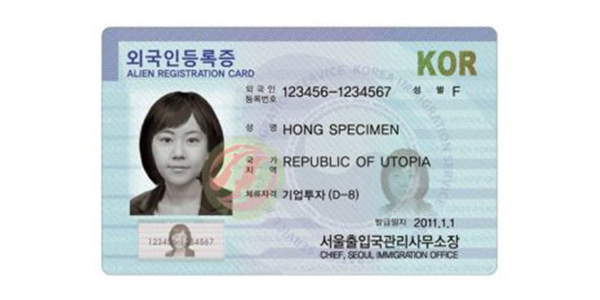
The ARC contains critical information including the alien registration number (a unique 13-digit identifier), visa status (such as D-2, E-7, F-4, F-6), authorized period of stay, full name, nationality, date of birth, and residential address in Korea. This card functions as the primary legal identity document for foreigners and is required for essential activities such as opening bank accounts, signing long-term housing contracts, enrolling in national health insurance, obtaining a mobile phone contract, and legally working under employment visas.
Without an ARC, foreign residents cannot access basic services or fulfill legal obligations. The card is managed through the HiKorea official immigration portal, where applicants can reserve appointments, check application status, and report required changes such as address updates or employment modifications.
Who Must Apply for ARC and When?
Any foreign national intending to stay in Korea for more than 90 days must apply for an ARC within 90 days of entry. This legal requirement applies to all long-term visa holders, regardless of purpose—whether studying, working, conducting business, or residing as a marriage migrant or overseas Korean.
Common Visa Types Requiring ARC Registration:
- D-2 (Student Visa): For full-time enrollment at Korean universities and colleges
- D-4 (General Trainee Visa): For language course students and short-term training participants
- E-7 (Professional Worker Visa): For skilled workers in specialized fields such as technology, engineering, or education
- E-9 (Non-professional Employment Visa): For workers in manufacturing, agriculture, fishery, and construction sectors
- F-4 (Overseas Korean Visa): For ethnic Koreans born abroad who wish to live and work in Korea
- F-6 (Marriage Migrant Visa): For foreign spouses of Korean nationals
Failure to apply within the 90-day deadline may result in fines ranging from 100,000 to 1,000,000 KRW and potential visa complications, including restrictions on future extensions or status changes. Applicants must be physically present in Korea when submitting the application—applications cannot be processed from outside the country.
How to Apply for ARC (Step-by-Step Process)
The ARC application process requires advance online reservation through HiKorea, document preparation, and an in-person visit to the local immigration office. The entire process typically takes 2 to 4 weeks from application to card issuance.
Step 1: Make Online Reservation
Visit the HiKorea website, navigate to the "Reserve Visit" section, select the immigration office nearest to the registered address, and choose "Alien Registration" as the visit purpose. Select an available date and time slot, then confirm the reservation. A confirmation email or SMS will be sent with the appointment details.
Step 2: Prepare Required Documents
Before visiting the immigration office, carefully prepare all required documents to avoid delays or rejection. Missing even one document may require rescheduling the appointment, which can delay the ARC issuance by several weeks. Review this checklist thoroughly and prepare both original documents and photocopies where indicated.
| Required Document |
Detailed Description & Important Notes for Beginners |
|---|---|
| Passport (Original) |
Bring the original passport with a valid visa stamp clearly visible. The passport must have at least 6 months remaining validity. Prepare 1 photocopy of the passport information page and visa page. Tip: Check the visa sticker in the passport matches the intended stay period. |
| Application Form |
Complete the Unified Application Form (통합신청서) in Korean or English. Download link: HiKorea Application Forms Fill out all sections clearly using black or blue ink (no pencil). Tip: Forms are also available at the immigration office, but downloading and completing in advance saves time. |
| Passport Photo |
Size: Exactly 3.5cm × 4.5cm (standard Korean passport size) Background: Plain white (no patterns, shadows, or colors) Recency: Taken within the past 6 months Requirements: Face forward, both ears visible, no glasses, neutral expression Common mistake: Using photos with colored backgrounds or taken more than 6 months ago will result in rejection. Tip: Photo studios near immigration offices offer quick passport photo services (usually 5,000–10,000 KRW for 4–6 prints). |
| Housing Contract |
Proof of residential address in Korea. Acceptable documents include: • Rental agreement (임대차계약서) with landlord signature and seal • Dormitory residence certificate from university • Housing confirmation letter from employer The address on this document will be printed on the ARC. Tip: If staying with a friend or family member, request a housing confirmation letter with their signature, ID copy, and utility bill showing the address. |
| Visa-Specific Documents |
Additional documents vary by visa type: • D-2 (Student): Certificate of enrollment from university • E-7 (Work): Employment contract + employer's business registration certificate • F-6 (Marriage Migrant): Korean spouse's family relation certificate + resident registration • F-4 (Overseas Korean): Proof of Korean heritage (family register, etc.) Tip: Contact the university international office or employer's HR department to request these documents in advance. Official documents issued by government offices typically take 1–3 business days. |
| Application Fee |
30,000 KRW in cash (credit cards not always accepted) Bring exact change or small bills—some offices have limited change available. Tip: There are usually ATMs and convenience stores near immigration offices if additional cash is needed. |
Beginner's Checklist Summary:
- Original passport + 1 photocopy (information page & visa page)
- Completed application form (download from HiKorea)
- 2 recent passport photos (3.5cm × 4.5cm, white background)
- Housing contract or residence certificate (original + 1 copy)
- Visa-specific documents (contact university/employer if unsure)
- 30,000 KRW in cash
- HiKorea appointment confirmation (printed or on mobile)
Pro Tip: Organize all documents in a clear folder in the order listed above. Immigration officers review documents quickly, and having them organized demonstrates preparation and speeds up processing.
Step 3: Visit Immigration Office on Scheduled Date
Arrive at the immigration office at the reserved time with all prepared documents. Submit the documents to the assigned counter, where an officer will review the materials. Fingerprints will be collected (both index fingers) for biometric registration, and a digital photograph will be taken on-site. Pay the 30,000 KRW application fee at the designated payment counter. After payment, receive a receipt and submission confirmation slip with an expected issuance date.
Step 4: Receive ARC Card
Processing typically takes 2 to 4 weeks. The immigration office will send an SMS or email notification when the card is ready for pickup. Return to the same immigration office with the passport and submission receipt to collect the ARC. Verify that all printed information on the card is accurate before leaving the office.
Video Source: YouTube
ARC Renewal, Reissuance & Status Change
The validity period of an ARC is directly linked to the visa expiration date. Foreign residents must monitor their visa status and apply for extensions, reissuances, or status changes as needed to maintain legal residence.
- Extension of Stay: Apply at least 1 month before the visa expiration date. Extensions are granted based on continued eligibility (e.g., enrollment proof for students, employment contract for workers). Extension applications require updated documents and payment of the 60,000 KRW extension fee.
- Reissuance of ARC: Required if the card is lost, stolen, damaged, or if personal information changes (e.g., name change, passport renewal). A reissuance fee of 30,000 KRW applies. Report lost cards immediately to prevent identity theft.
- Address Change Notification: Foreign residents must report address changes to the immigration office within 14 days of moving. This can be done online via HiKorea or in person at the local office. Failure to report may result in fines.
- Status Change Application: Changing visa categories (e.g., from D-2 student visa to E-7 work visa) requires a formal status change application, payment of the 100,000 KRW fee, and submission of documents proving eligibility for the new visa type.
ARC Fees, Processing Time & Legal Obligations
All ARC-related services involve processing fees set by the Korea Immigration Service. These fees are non-refundable regardless of application outcome.
| Service Type |
Fee (KRW) |
|---|---|
| ARC Issuance (Initial Registration) |
30,000 |
| Extension of Stay (Visa Renewal) |
60,000 |
| Status Change (Visa Type Change) |
100,000 |
| ARC Reissuance (Lost/Damaged Card) |
30,000 |
Additional Legal Obligations for ARC Holders:
- Occupation and Income Reporting: Work visa holders (E-series visas) must report employment status and annual income through HiKorea annually. Failure to report may affect visa renewal.
- School Attendance Certificate: Foreign children aged 6 to 18 must submit school enrollment proof to demonstrate compliance with education regulations.
- Passport Validity: The ARC remains valid only if the linked passport is valid. If the passport expires, the ARC becomes invalid even if the visa period has not expired. Renew passports before expiration and update immigration records.
- Re-Entry Permit: Leaving Korea for travel requires a re-entry permit to maintain ARC validity. Single or multiple re-entry permits can be obtained online or at the airport before departure.
Common ARC Mistakes Foreigners Make
Avoiding common errors during the ARC application and maintenance process ensures smooth legal residence in Korea. Many foreigners unknowingly violate regulations, leading to fines or visa complications.
- Missing the 90-Day Registration Deadline: One of the most frequent violations. Set reminders immediately after entering Korea to ensure timely application.
- Not Reporting Address Changes: Moving to a new residence without notifying the immigration office within 14 days results in penalties. Always update addresses promptly online or in person.
- Attempting Application While Outside Korea: ARC applications and renewals can only be processed while physically present in Korea. Plan travel accordingly to avoid missing deadlines.
- Confusing Visa Validity with ARC Validity: The ARC expiration date matches the visa expiration date. Renewing only the passport does not extend the ARC—visa extensions are necessary.
- Ignoring Re-Entry Permit Requirements: Leaving Korea without a re-entry permit invalidates the ARC, requiring a new visa application upon return. Always obtain a re-entry permit before international travel.
- Failing to Report Employment Changes: Work visa holders must report job changes or terminations to the immigration office. Unreported changes can lead to visa cancellation.
Final Checklist Before Applying for ARC
Before attending the immigration office appointment, ensure all preparations are complete to avoid delays or rejections. Verify that the HiKorea appointment is confirmed, all required documents are prepared and organized, the visa type and eligibility are clearly understood, and passport validity extends beyond the intended stay period. The ARC serves as the foundation of legal residence in Korea, enabling access to essential services, employment authorization, and full integration into Korean society.


