The first time visiting a packed Seoul restaurant, 15 minutes passed without anyone approaching the table. Nobody came. The food was never ordered. The reason was simple: not knowing how to call the staff — a mistake almost every first-time visitor makes. Learning Korean restaurant etiquette, from how to call waiter Korea style, to understanding free banchan (side dish) refills, modern table order systems, and the no-tipping culture in Korea, completely transforms the local dining experience.
It was a small restaurant in Mapo-gu. Other tables were busy. Staff were rushing around. Eventually, a Korean friend leaned over and simply said — "Just call them. Say 'Jeogiyo!'" One word changed everything. The server arrived in seconds, smiled, and the meal began. That single moment is the reason this guide exists.
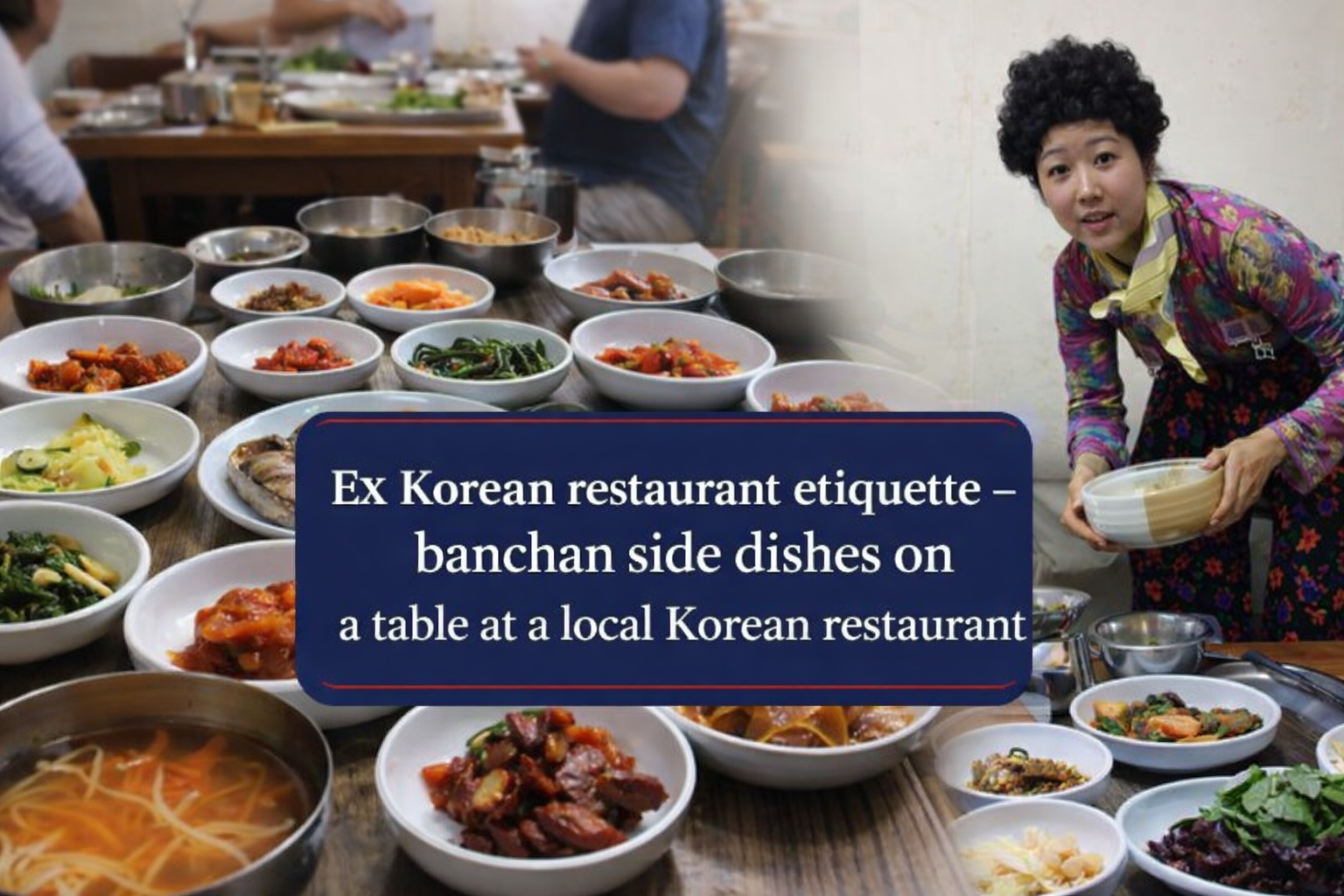
Why Calling "Imo-nim!" Works in Korean Restaurants
Walk into most Korean restaurants and one thing becomes clear immediately: servers do not make regular rounds. The unwritten rule is that customers call when ready — and the most iconic phrase for doing that is "Imo-nim! (이모님)"
The word literally means "aunt" in Korean. Inside a restaurant, it serves as a warm, respectful address for middle-aged female staff — a reflection of Korea's family-oriented hospitality culture. Staff genuinely appreciate the term; it signals that a customer understands local customs.
How to Call a Waiter in Korea (Without Feeling Awkward)
There are three main expressions locals use to call waiter Korea style. Choosing the right one takes about five seconds of observation.
| Expression | Korean | Meaning | Best Used When |
|---|---|---|---|
| Imo-nim! | 이모님 | "Aunt" — warm & friendly | Local diners, middle-aged female staff |
| Sajang-nim! | 사장님 | "Boss / Owner" | Small family restaurants, any staff |
| Jeogiyo! | 저기요 | "Excuse me" — universal | Any restaurant, any gender, any setting |
The Table Bell: When Calling Out Is Not Required
Many Korean restaurants now have a small call bell Table Bell mounted on the wall or built into a tablet at the table. A single press notifies staff silently — increasingly common in busier city areas.
Table Order & Self-Service: How Korean Restaurants Are Changing in 2026
The single biggest shift in Korean restaurant culture since 2023 is the rapid rise of the Table Order (테이블 오더) 2026 Trend system. In many modern restaurants — particularly in Gangnam, Hongdae, and Sinchon — calling "Imo-nim!" is no longer necessary at all.
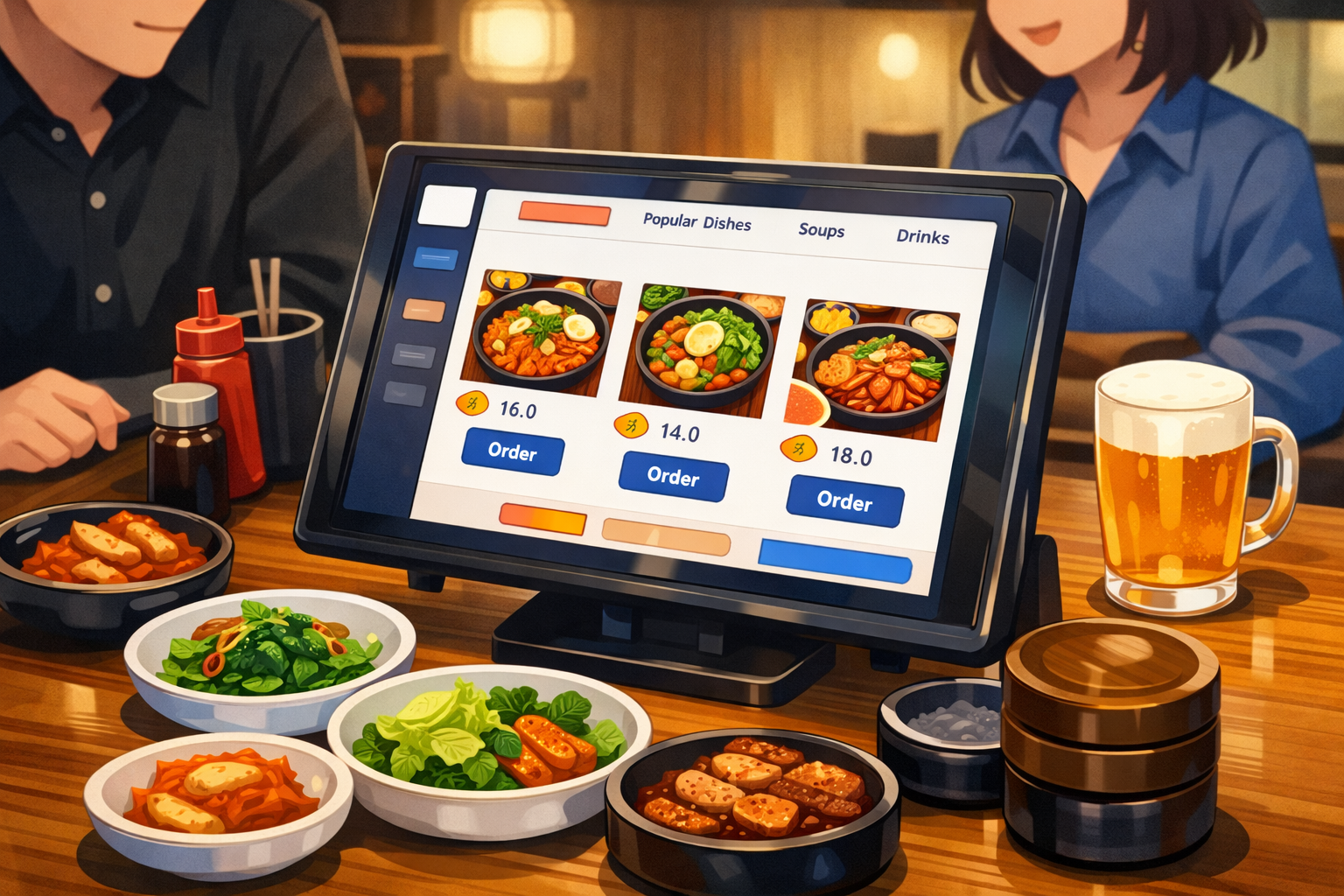
Tablet Table Order
A tablet on the table lets customers browse, customize orders, and pay — all without calling anyone. Many support English language switching.
Self-Service Water
If the entrance reads "물은 셀프" customers collect water independently from a station near the entrance.
Self Banchan Bar
Many restaurants now offer a "셀프 바" where customers pick up side dish refills independently.
Cashless Payment
In 2026, most Korean restaurants do not accept cash. Card or mobile payment is standard. Prepare a travel card such as WOWPASS or NAMANE before arrival.
How to Order Food in Korea: Step-by-Step for First-Timers
The full process of ordering food in Korea follows a consistent rhythm across most local restaurants. Here is exactly what to expect.
For an official overview of Korean food culture, the Korea Tourism Organization (English) maintains a regularly updated dining guide for international visitors.
Banchan Refill Culture: Free Korean Side Dishes Explained
One of the most genuinely surprising aspects of dining in Korea is the arrival of multiple small side dishes alongside every meal. These are called Banchan (반찬) Free Refill — and they are included at no extra cost.
- Kimchi (김치) — Fermented spicy cabbage; Korea's most iconic condiment
- Kongnamul (콩나물) — Lightly seasoned soybean sprouts
- Kkakdugi (깍두기) — Crunchy cubed radish kimchi
- Myeolchi-bokkeum (멸치볶음) — Sweet-savory stir-fried anchovies
- Japchae (잡채) — Glass noodles with sesame and vegetables
Meaning: "Excuse me, could we have more side dishes, please?"
In restaurants with a 셀프 바 (Self-bar)
, simply walk to the counter and refill independently — no need to ask.
This free banchan refill culture, combined with the fact that tipping in Korea is not practiced or expected at local restaurants, makes eating out here feel remarkably generous.
Want to order Korean food to the Han River and eat like a local?
Read: Baemin English Guide 2026: Order Food to Han River Parks
Looking for the best way to get around Seoul between restaurant stops?
Read: Kakao T vs. Uber (UT): Best Taxi App for Seoul Tourists in 2026
Conclusion
In 2026, Korean restaurant etiquette covers more than just calling "Jeogiyo!" — it now includes navigating tablet order systems, self-service banchan bars, and cashless payment. Master these habits, enjoy unlimited free banchan refills, and leave without any thought of tipping in Korea. Local dining here rewards curiosity.


