How to Protect Housing Deposit Korea: Legal Guide for Foreigners (2026)
When I first moved to Seoul, I almost lost my $15,000 Jeonse deposit because my real estate agent told me signing the contract was enough. It wasn't. Renting in Korea as a foreigner means a housing deposit can easily reach tens of thousands of dollars — yet many tenants lose it entirely by skipping the right legal steps. The Korean Housing Lease Protection Act (주택임대차보호법) fully covers foreign tenants, but protection only activates after completing address registration Korea (전입신고), obtaining a 확정일자 (fixed date stamp), and running a proper Jeonse scam prevention check on the property. This guide covers every step needed to protect housing deposit Korea — legally, clearly, and completely.
Key Takeaways
- Address registration (전입신고) AND a fixed date stamp (확정일자) are both required — either step alone provides incomplete protection
- Always check the property's 등기부등본 (real estate registry) before paying any deposit — this single document reveals all hidden financial risks
- Moving to a new address in Korea automatically cancels existing deposit protection — always re-register on move-in day at the new address
How to Legally Secure Your Housing Deposit in Korea
Under the Housing Lease Protection Act (주택임대차보호법), all tenants in Korea — including foreigners on any visa status — are legally entitled to deposit protection. However, this protection is not automatic. It requires two specific legal actions completed on or before move-in day. Missing either step leaves a tenant with no priority standing if the landlord defaults or the property is auctioned off.
The Two Essential Legal Steps
Many foreigners assume that signing a lease contract is sufficient to protect their deposit. It is not. The contract alone carries no priority right under Korean law. Both steps in the table below must be completed to activate full legal protection.
| Step | Action | Where to Complete | Cost | Timing |
|---|---|---|---|---|
| 01 | Sign lease contract (임대차계약서) | Licensed real estate agent (공인중개사) | Agent fee applies | Before move-in |
| 02 | Pay deposit and receive the key | Landlord | — | Move-in day |
| 03 | Register address (전입신고) | Local community center (동주민센터) or Government24 | Free | Same day as move-in |
| 04 | Obtain fixed date stamp (확정일자) | Same community center or Internet Registry Office | Approx. 600 KRW | Same day as move-in |
| 05 | Store stamped lease contract safely | Keep physical + digital backup | — | Ongoing |
Legal protection becomes effective the day after both conditions are satisfied — meaning there is a built-in one-day gap. Completing both steps on move-in day minimizes this window to a single overnight period, which is the best practice for protecting a housing deposit in Korea.
Critical Warning: If the landlord transfers the property, takes on new debt, or the building is listed for auction before the tenant's address registration is confirmed, the tenant may lose priority right entirely. Even a one-day delay can be legally catastrophic. Register the address on the exact day the key is received — no exceptions.
Real Case: A foreign tenant registered their address 3 days after receiving the key, believing the weekend delay was harmless. During that 3-day gap, the landlord registered a ₩25,000,000 (approx. $18,500) bank loan against the property. Because the loan was recorded before the tenant's address registration, the bank received priority repayment when the property went to auction — and the tenant lost their deposit entirely. This scenario is not rare. It is one of the most common patterns seen in Jeonse fraud cases involving foreigners in Korea.
Just arrived in Korea and still navigating the basics? The complete process of ARC application, bank account setup, and legal residency registration is covered step by step at: Survive Your First 7 Days in Korea: ARC & Bank Setup 2026.
Jeonse Scam Prevention: Risk Check Before Signing
Jeonse fraud cases have surged significantly in recent years, and foreigners unfamiliar with local property markets are particularly vulnerable. Jeonse scam prevention begins well before signing any contract. The single most important tool available is the 등기부등본 (real estate registry document), which reveals the complete financial status of a property — including all mortgages, seizures, and legal claims.
How to Read the 등기부등본 (Real Estate Registry)
The 등기부등본 is a public legal document. It can be obtained at any 동주민센터 (community center), any district court, or online via the Internet Registry Office (대법원 인터넷등기소) for approximately 700 KRW. Every prospective tenant should verify all five points below before transferring any deposit amount.
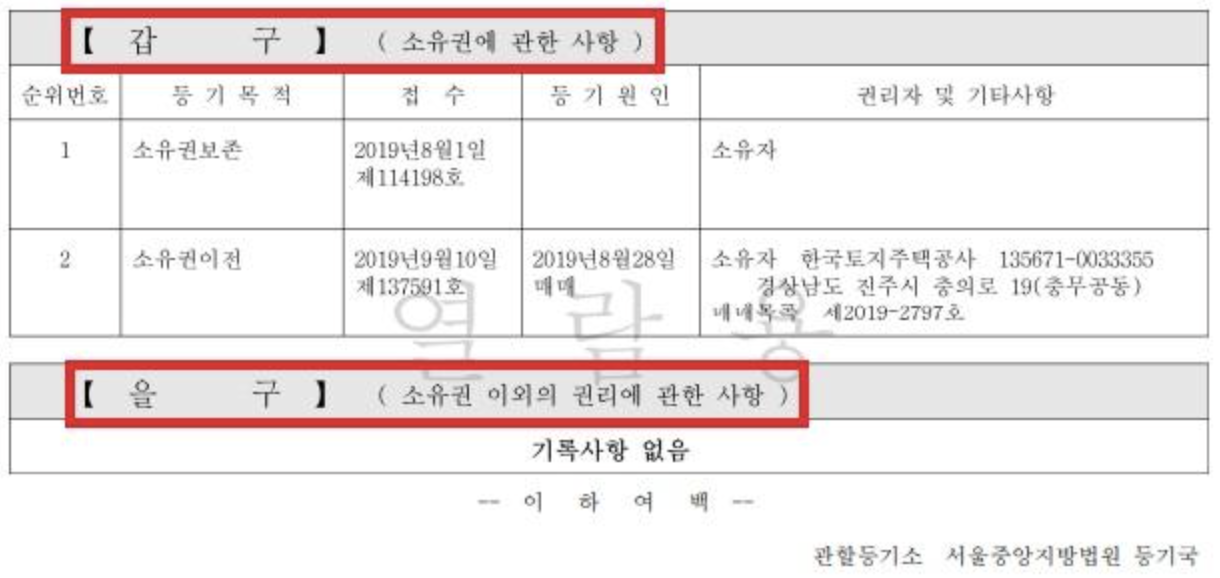
| Check Item | Where to Find | What to Verify | Risk Level if Ignored |
|---|---|---|---|
| Owner Name | 갑구 (Section A) | Must match the person signing the lease | Very High |
| Existing Mortgages | 을구 (Section B) | Total mortgage + your deposit must be below property value | Very High |
| Seizures / Liens | 갑구 (Section A) | Any 가압류 or 압류 entry signals immediate risk | Very High |
| Property Value | 공시가격 (Officially Assessed Value) | Check via 공동주택 공시가격 포털 | High |
| Date of Last Change | 등기부등본 발급일 | Request a fresh copy on the day of contract signing | Medium |
Jeonse Scam Pattern to Know: If the Jeonse deposit price is significantly below market rate, treat it as a red flag, not a bargain. Many scam landlords deliberately price Jeonse deposits low to attract foreign tenants who are unfamiliar with local pricing. Always compare prices using the Ministry of Land's Real Transaction Price System before proceeding.
Insider Tip: A common issue reported by foreigners on Reddit Korea and expat forums: many real estate agents do NOT proactively show clients the 등기부등본. Always request it yourself, in writing, before contract signing. A legitimate agent will provide it without hesitation. If an agent resists or delays, that alone is a reason to walk away from the deal.
Address Registration and Priority Rights (Why It Matters)
Address registration Korea (전입신고) is the legal act that establishes a tenant's priority ranking among all creditors of a property. Without it, even a long-term tenant with a signed lease contract has no legal standing to claim their deposit first in an auction or foreclosure scenario.
What Is Priority Right (우선변제권)?
Priority right means the tenant is legally entitled to receive their deposit before other parties in a property settlement. Under Korean law, this includes ranking ahead of banks that registered mortgages after the tenant's address registration date, as well as unsecured creditors and subsequent tenants.
| Situation | With Address Registration | Without Address Registration |
|---|---|---|
| Landlord defaults on bank loan | Tenant repaid first (if registered before the loan) | Bank repaid first — tenant may receive nothing |
| Property goes to auction | Tenant holds legal priority claim | Tenant is treated as unsecured creditor |
| Landlord sells property | New owner must honor the lease | New owner may evict tenant |
| Multiple tenants in the building | Priority determined by registration date | No ranking — no protection |
Same-Day Strategy for Maximum Protection
The safest approach is to complete all steps on the exact same day the key is received. This minimizes the exposure window to a single overnight period — the smallest legally possible gap. Below is the recommended same-day sequence:
- Sign lease contract at the licensed agent's office
- Transfer deposit to landlord's verified bank account
- Receive key and physically enter the property
- Register address (전입신고) at the local community center
- Obtain fixed date stamp (확정일자) on the same visit
- Store the stamped contract in both physical and digital formats
Moving Within Korea? If a tenant relocates to a new address in Korea — even within the same building — the address registration must be updated immediately at the new location. Failure to re-register cancels all existing protection rights tied to the previous address. This applies even for short-term internal moves. Re-registration at the new address restarts the priority timeline from the new registration date.
For foreigners who also need to understand how to open a Korean bank account to safely transfer deposit funds, this step-by-step guide is highly relevant: 5 Easy Steps to Open a Korean Bank Account (2026 Foreigner Guide).
Conclusion: KimchiLandGuide's Verdict
Protecting a housing deposit in Korea is entirely achievable — but it requires taking the right legal steps on the right day. Register the address, obtain the fixed date stamp, and verify the property registry before signing. These three actions form the complete legal shield available to every foreign tenant under Korean law. The law is on the tenant's side, but only if activated correctly.
Planning your life in Korea beyond housing? TalkMaru covers the Seoul side of expat life in detail — from booking Michelin-starred restaurants to navigating taxis as a non-Korean speaker. A practical starting point: Kakao T vs. Uber (UT): Best Taxi App for Seoul Tourists in 2026. Getting around the city confidently is the next step after securing a place to live.


